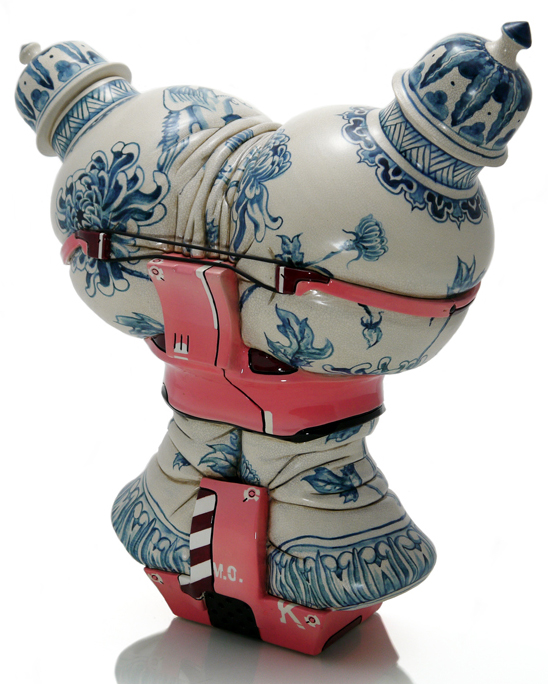
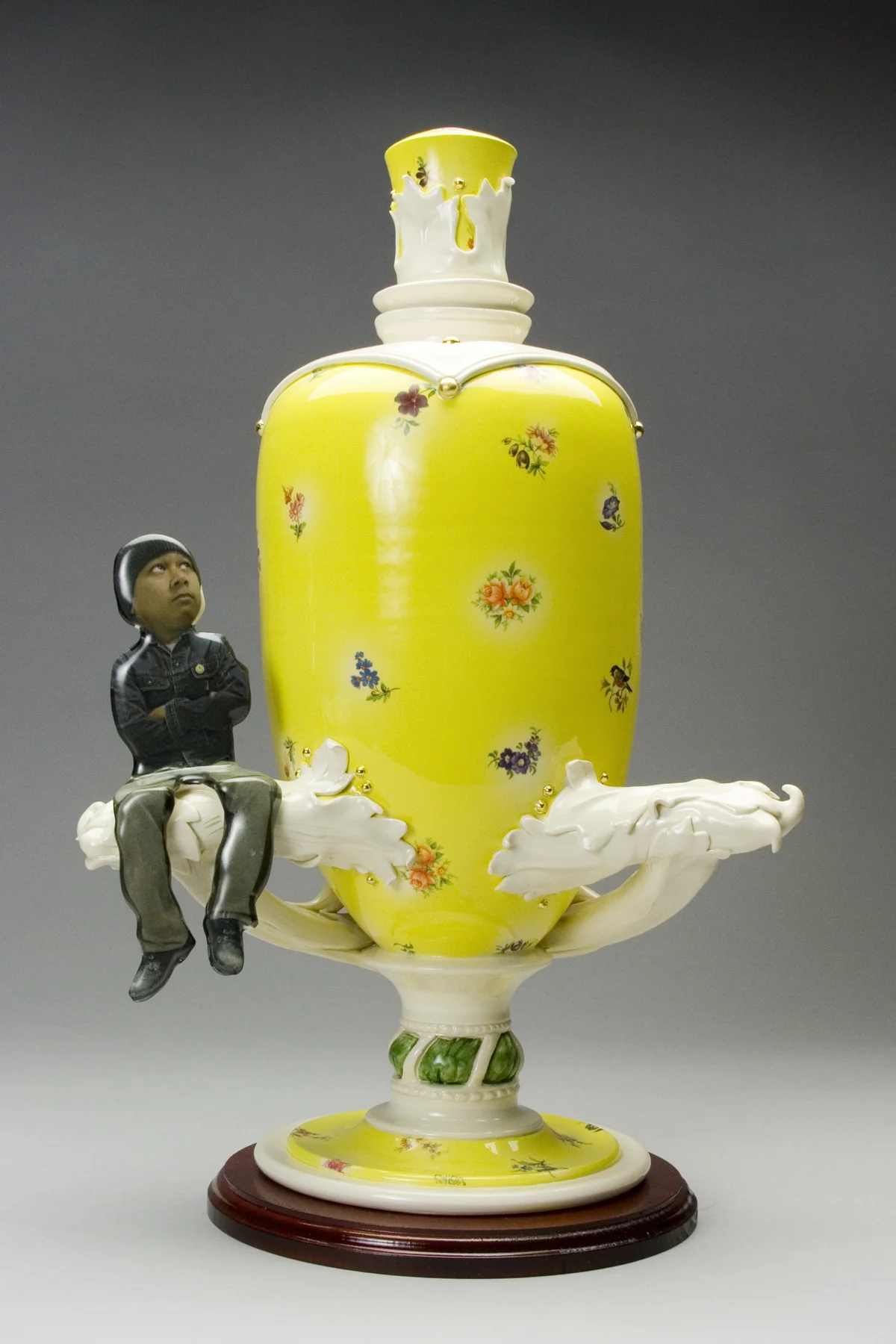
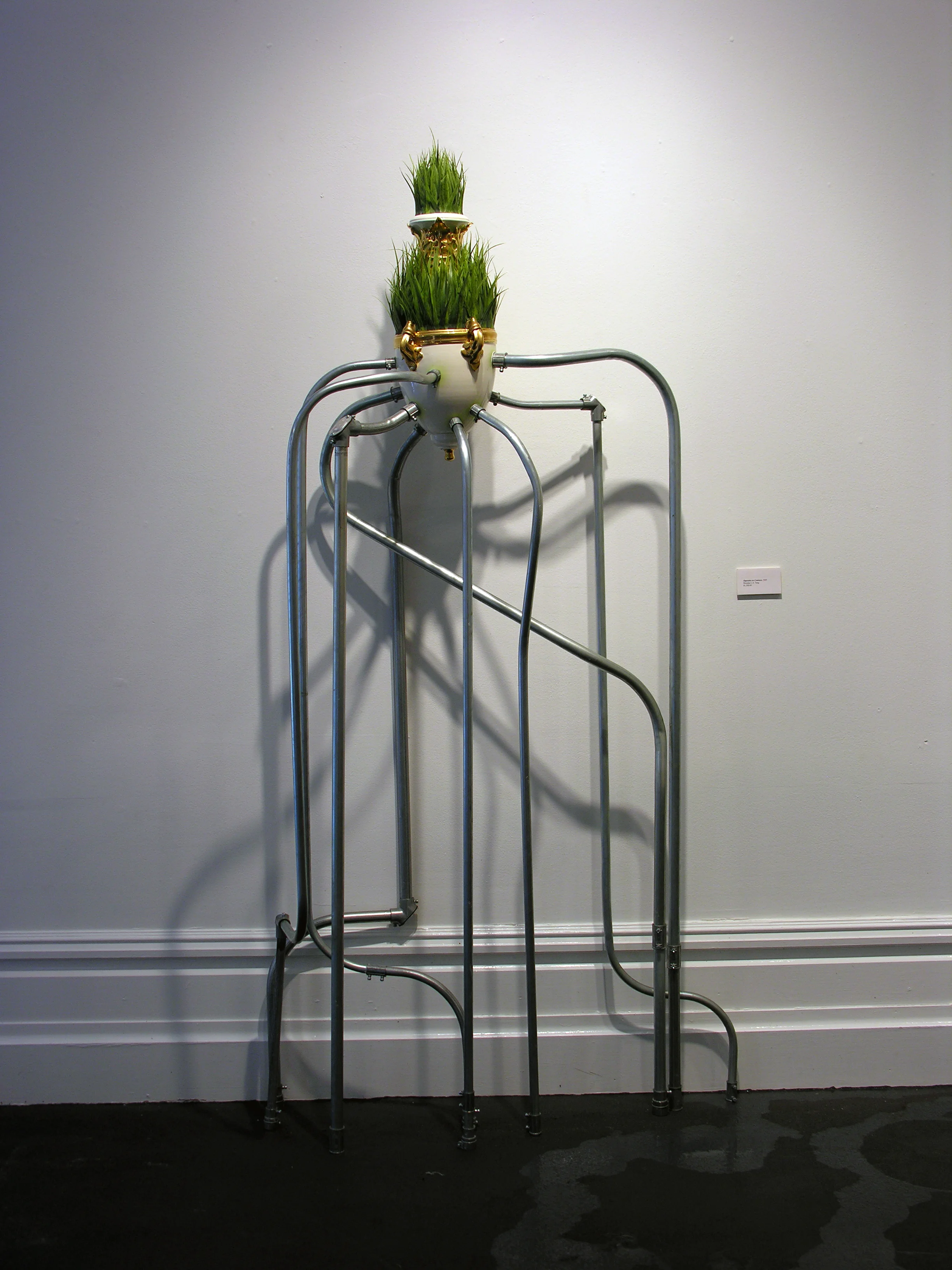
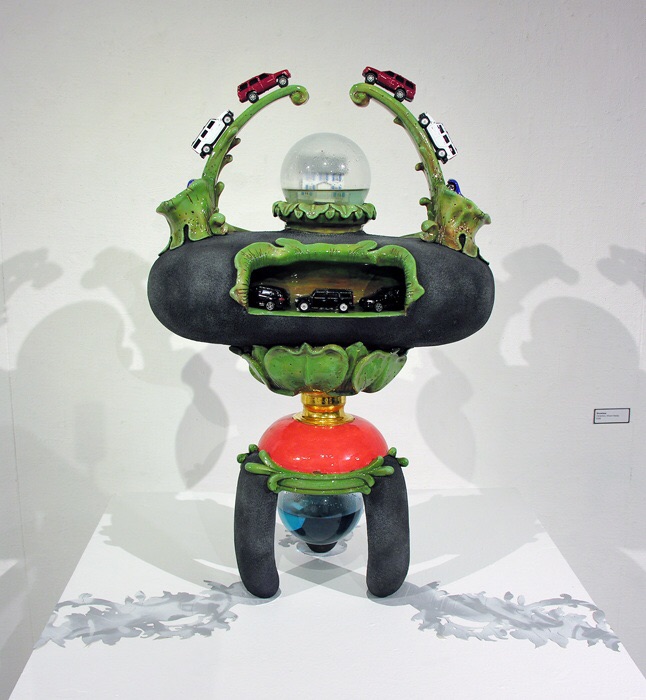
Manga Ormolu enters the dialogue on contemporary culture, technology, and globalization through a fabricated relationship between ceramic tradition (using the form of Chinese Ming dynasty vessels) and techno-Pop Art. The futuristic update of the Ming vessels in this series recalls 18th century French gilded ormolu, where historic Chinese vessels were transformed into curiosity pieces for aristocrats. But here, robotic prosthetics inspired by anime (Japanese animation) and manga (the beloved comics and picture novels of Japan) subvert elitism with the accessibility of popular culture.
Working with Asian cultural elements highlights the evolving Western experience of the “Orient.” This narrative is personal: the hybridization of cultures mirrors my identity as an ethnically-mixed Asian Canadian. My family history is one of successive generations shedding the markers of ethnic identity in order to succeed in an adopted country – within a few generations this cultural filtration has spanned China, India, Trinidad, Ireland and Canada.
While Manga Ormolu offers multiple points of entry into sociocultural dialogue, manga, by nature, doesn’t take itself too seriously. The futuristic ornamentation can be excessive, self-aggrandizing, even ridiculous. This is a fitting reflection of our human need to envision and translate fantastic ideas into reality; in fact, striving for transcendence is a unifying feature of human cultural history. This characteristic is reflected in the unassuming, yet utterly transformable material of clay. Manga Ormolu, through content, form and material, vividly demonstrates the conflicting and complementary forces that shape our perceptions of Ourselves and the Other.
Ceramics, Mixed Media, (2011) h 18.5" (47cm).
Rodman Hall Collection
Rodman Hall Collection
Private Collection
Private Collection
Private Collection
in my happy place ;)
Private Collection
Ariana Museum Collection, Geneva
Royal Bank of Canada Collection
Museum of Anthropology Collection
Private Collection
Private Collection
Private Collection
Private Collection
Pottery is finally getting its big moment in Canada! From the first clay pots found on Turtle Island to over 14,000 active craft studios across the country, the popularity of pottery is exploding.
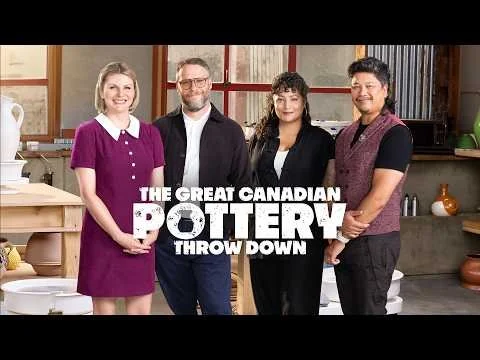
Join thousands of Canadians who are already getting their hands dirty to mould clay into everyday products by watching The Great Canadian Pottery Throw Down coming to CBC on February 8 at 8 pm (8:30 NL).
What is The Great Canadian Pottery Throw Down?
The Great Canadian Pottery Throw Down is a competition series that revels in the remarkable creativity of Canada's best amateur potters. Featuring clever challenges, beautiful creations, and personal stories between layers of humour and discovery, the series unearths what inspires the potter's passion for clay.
It's based on The Great Pottery Throw Down, a popular British show now in its seventh season and streaming on Channel 4. It was created by Love Productions who are also behind the global smash hit The Great British Baking Show.
What will happen in the show?
Ten of Canada's most talented potters will compete to be crowned best at the wheel. They'll take on two creative challenges each week to test their skill and technique.
The Main Make is each episode's biggest challenge where potters create a signature piece of pottery that involves several key stages, including building, drying, refining, glazing, firing — twice! — and assembly. This season's Main Makes include a hometown tribute, a chess set, a self-sculpture, a table lamp, a raku drink set, a nine-course dinner set, an indoor water fountain, and a tea set.
The potter's second challenge is either a Throw Down, which is a race against time, or a Spot Test measuring a specific skill or technique. Challenges this season include trimming bowls, throwing blindfolded, carving an urn, throwing tulip cups off the hump, and pulling handles.
Both challenges are critiqued and rated by our two resident pottery expert judges. Once the judges have assessed the potters' work, a potter will be selected to leave the competition and another potter will be named Potter of the Week and have their piece placed in the exclusive Throw Down Gallery. Three potters will make it to the finale, but only one will be crowned the winner of The Great Canadian Pottery Throw Down and take home the trophy.
Season 1 Trailer
Relatable (Asking a question to a pickup truck) —Vanessa Kwan
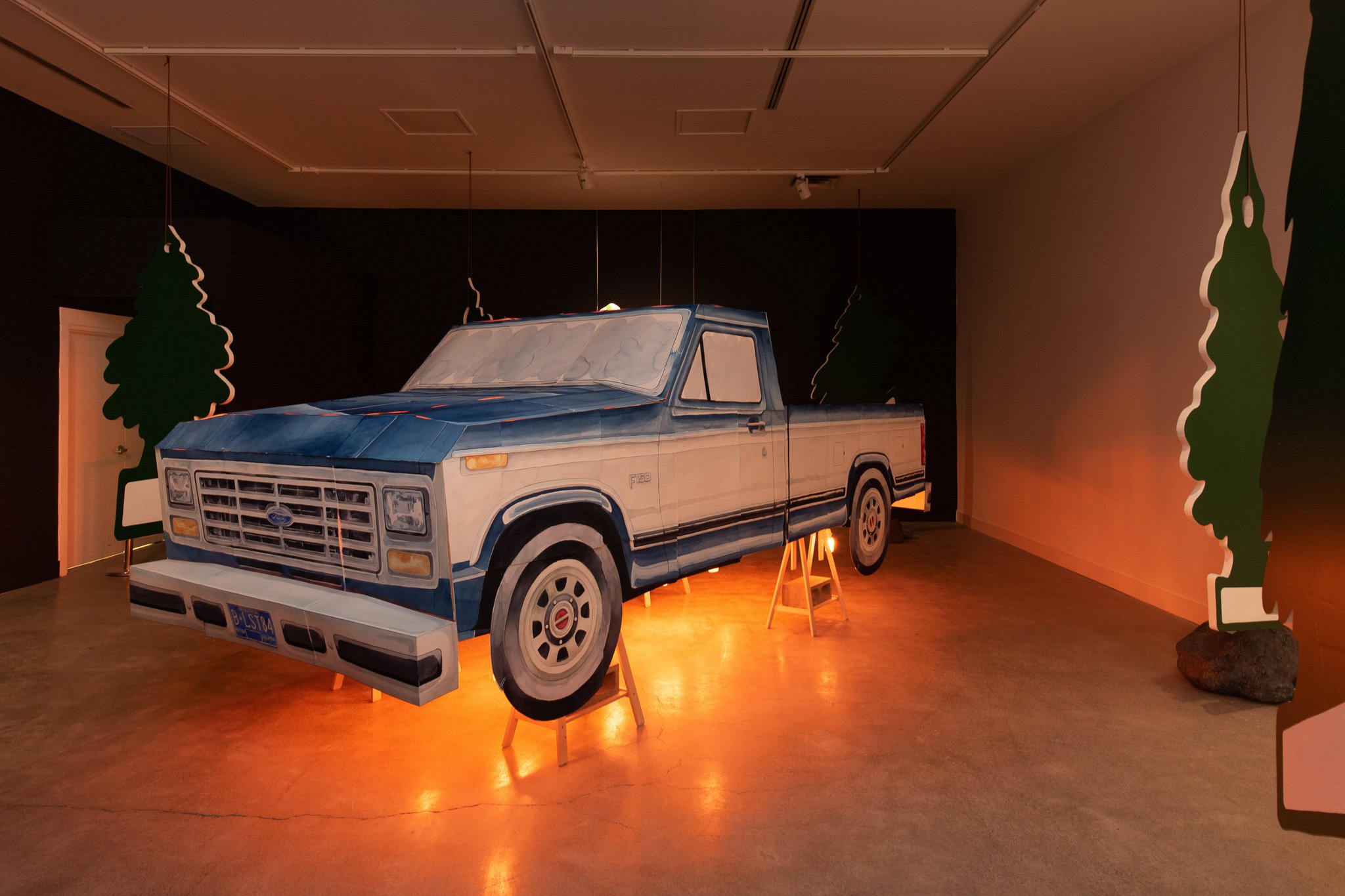
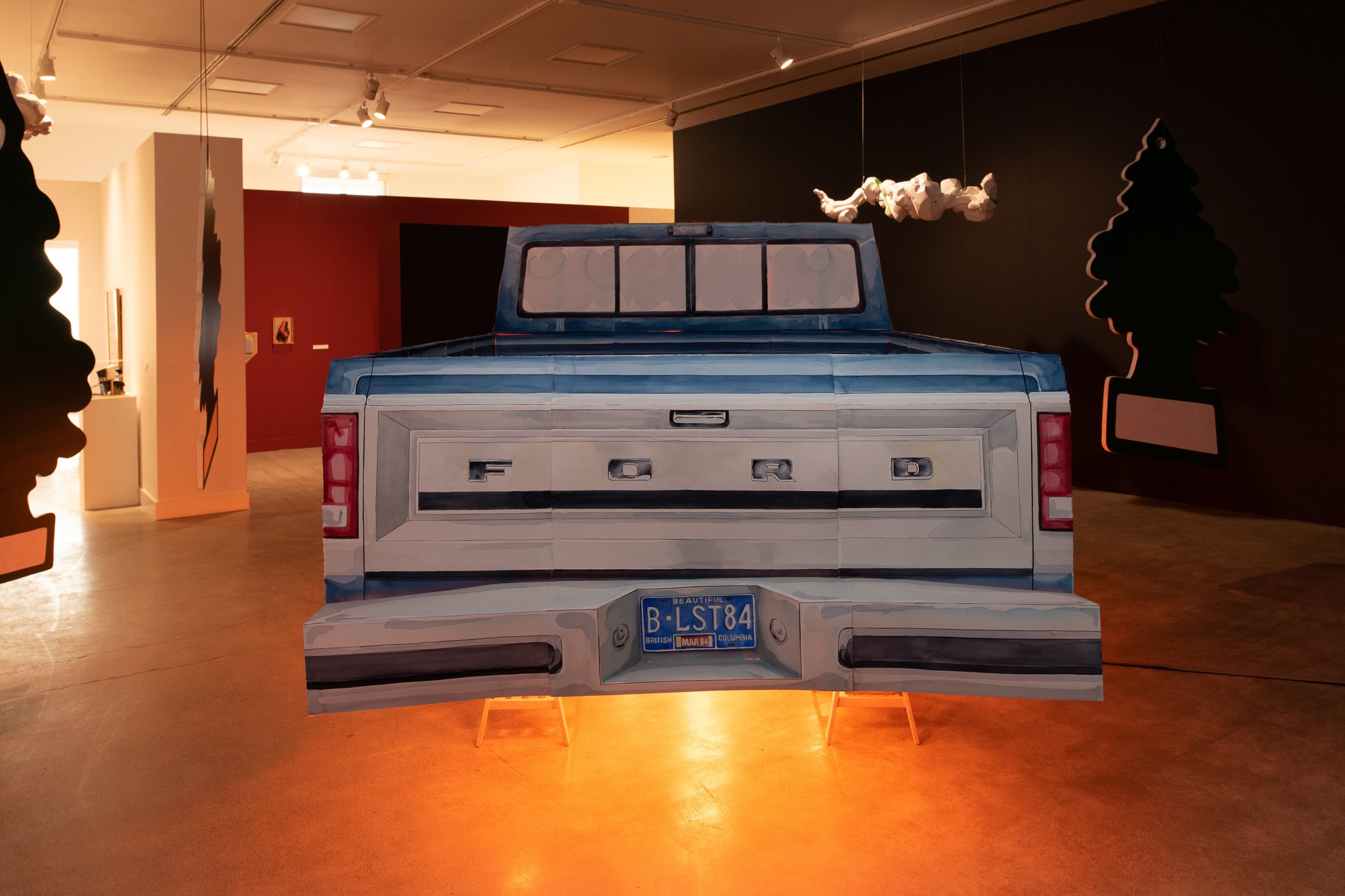
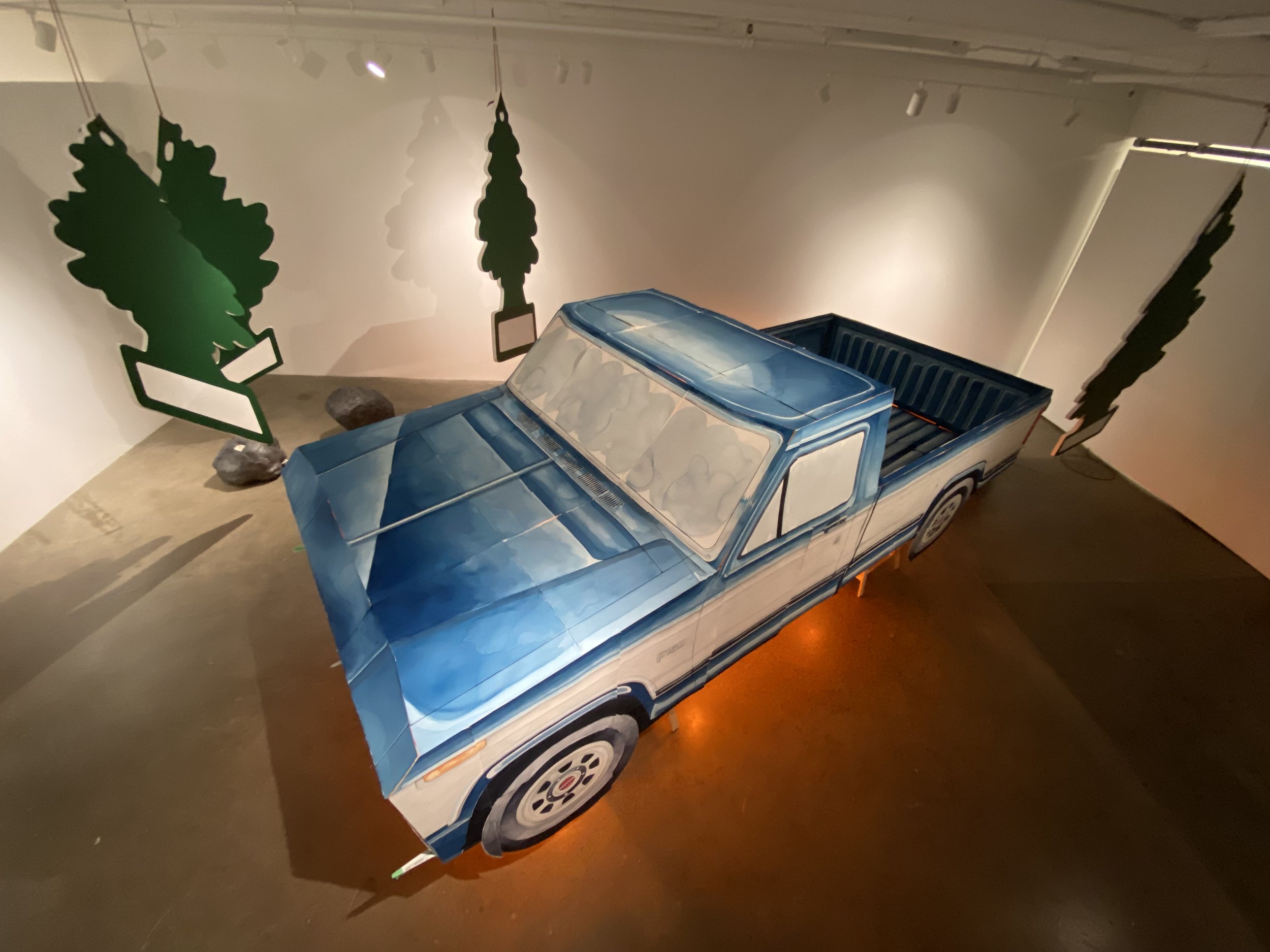
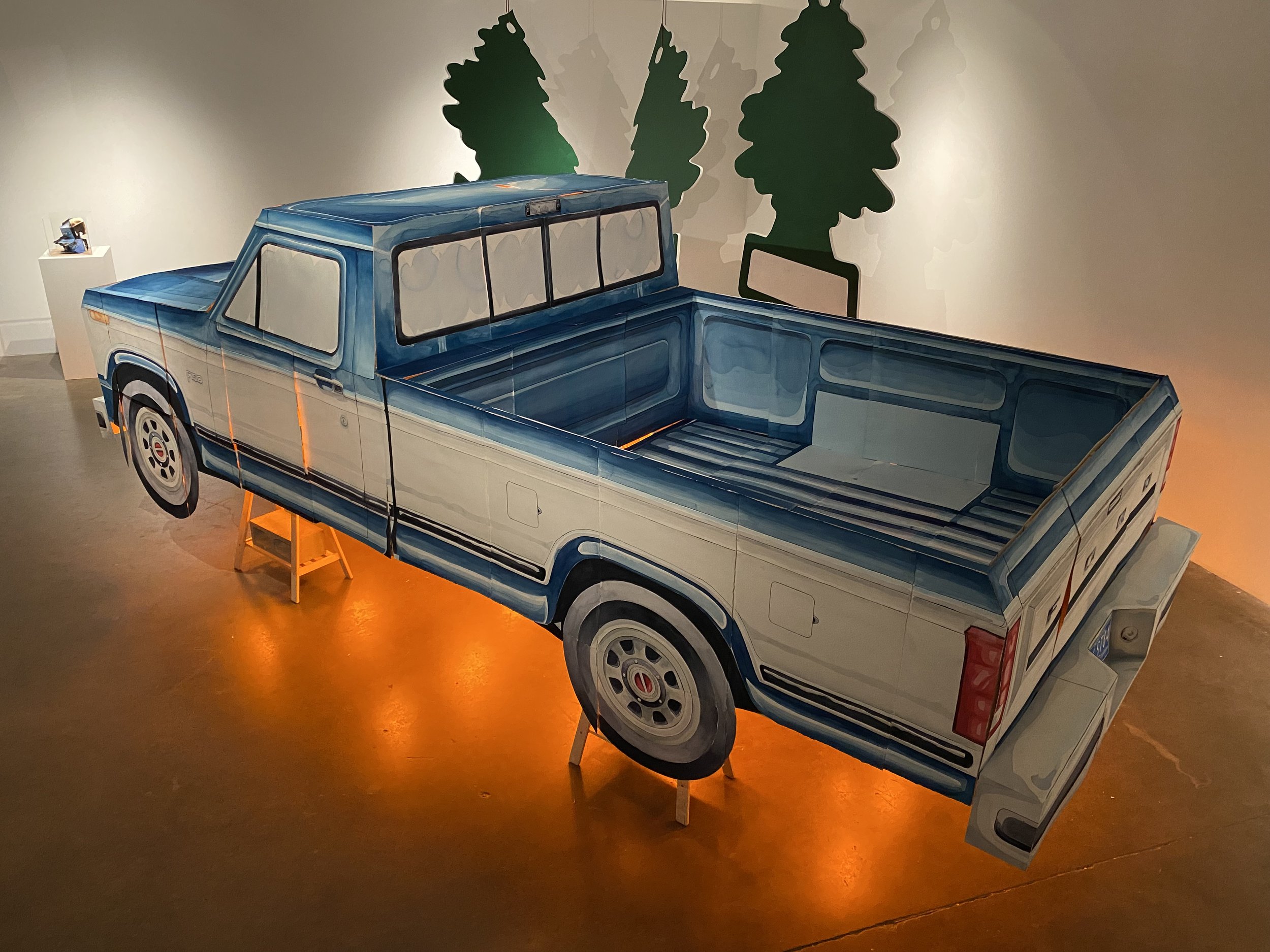
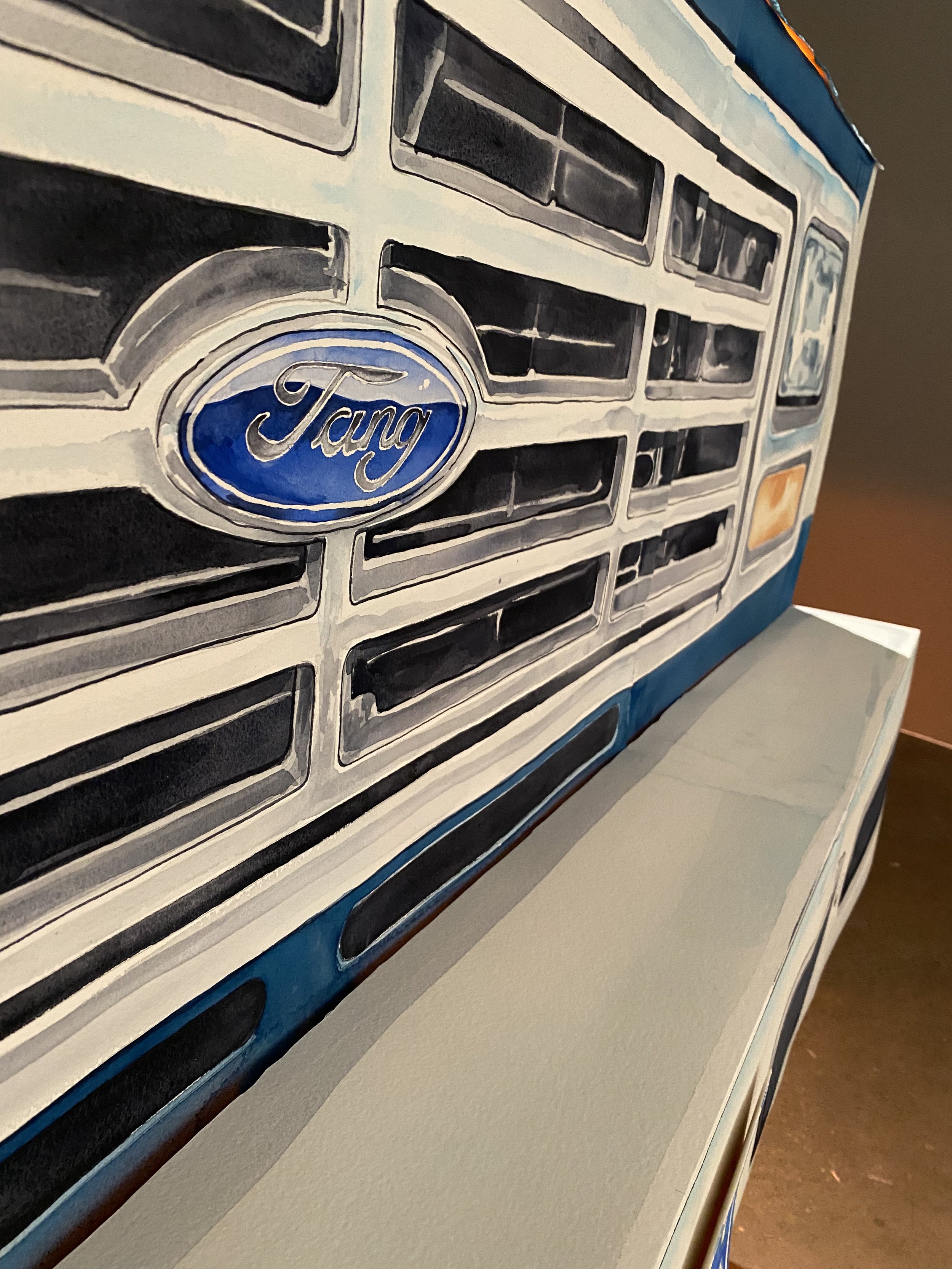
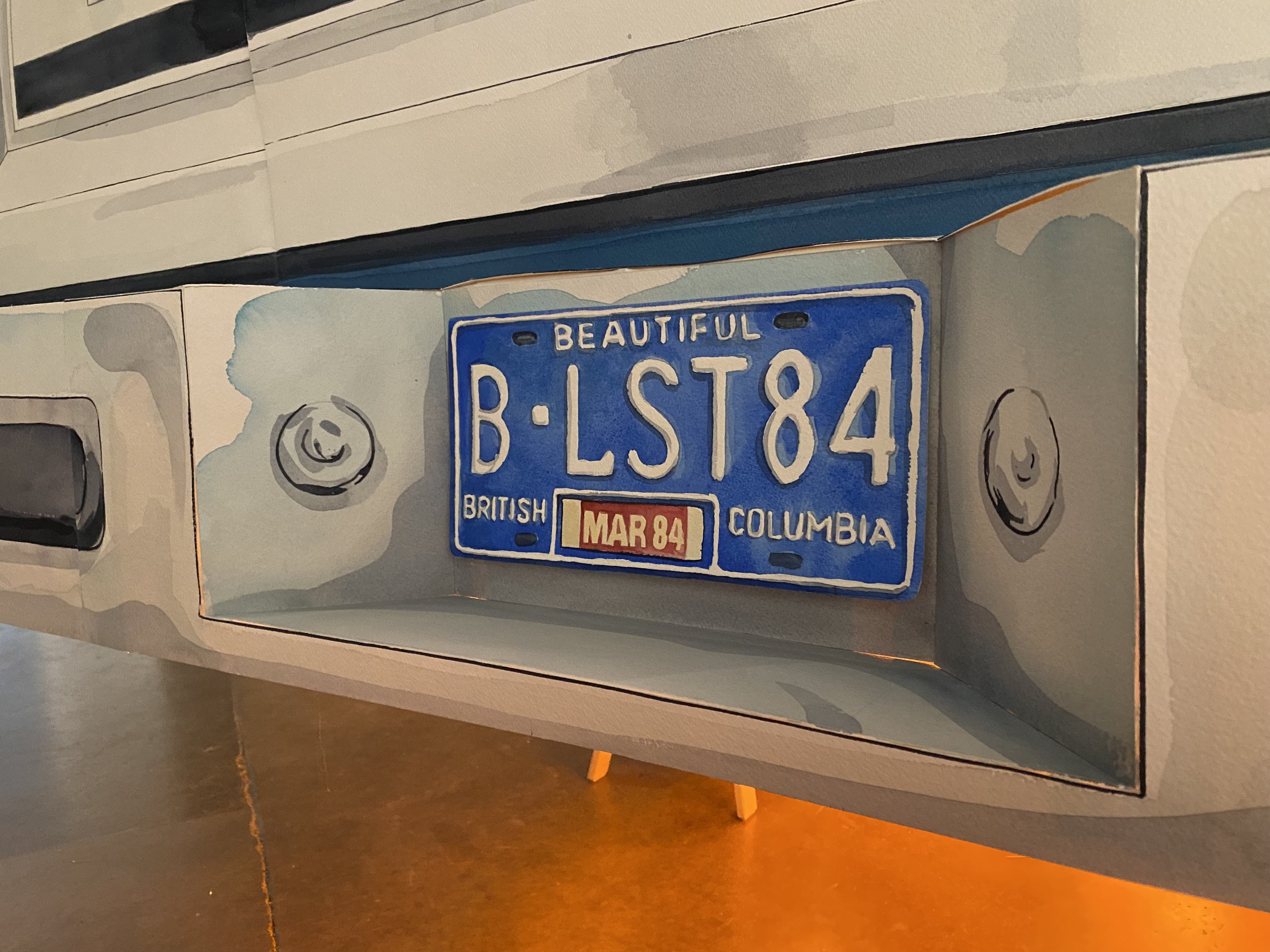
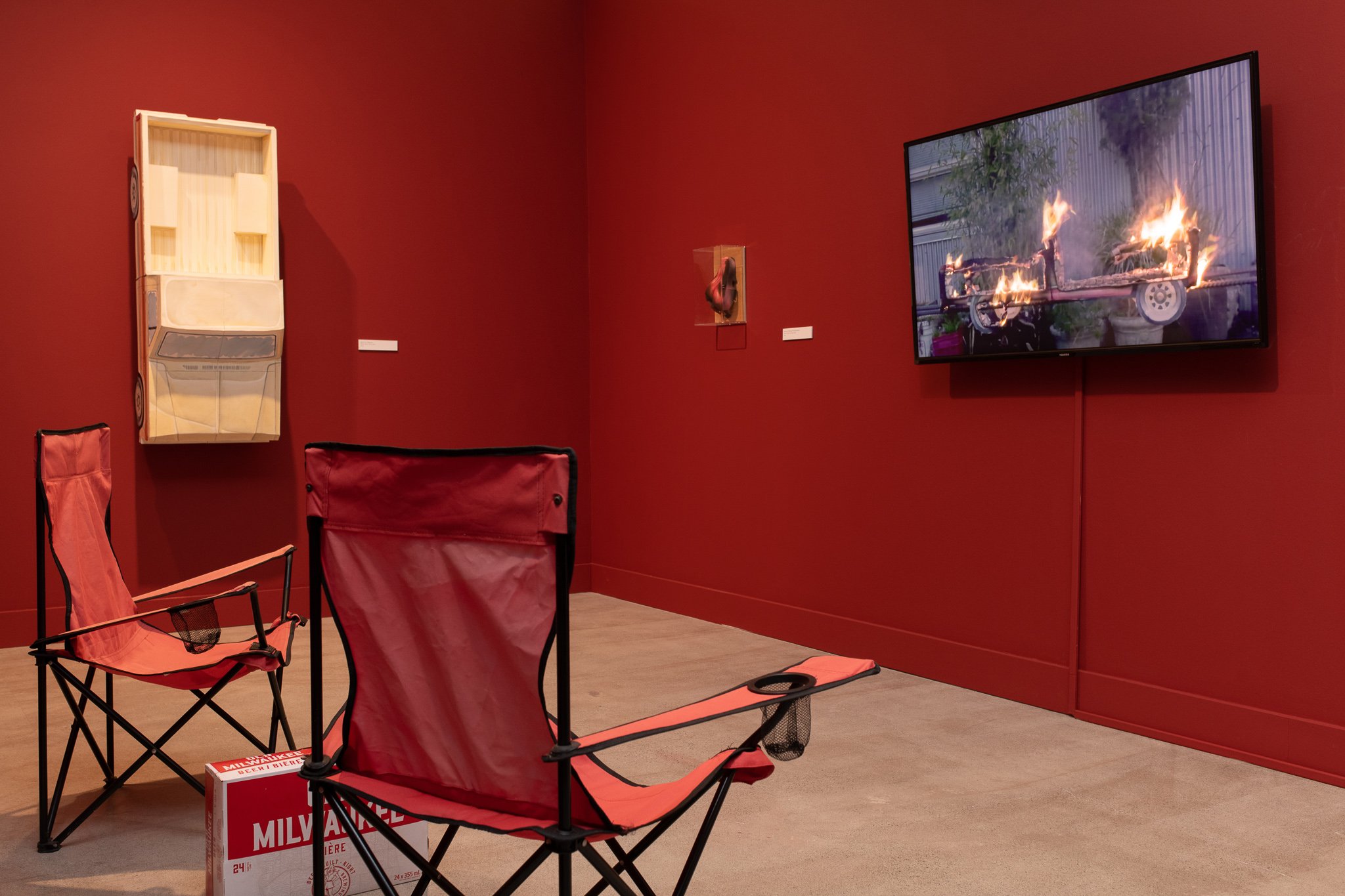
Maybe you’re asking yourself some questions. Or maybe you’re asking questions of this object, made by Brendan Lee Satish Tang, sitting as it now does in Nanaimo Art Gallery. To be sure, there are lots of objects in this show, and things on the walls or in vitrines, and a video. But I’m referring to the thing I think we’re all here to see.1
It’s amazing to see it at life-size, huh.
What are you? 2
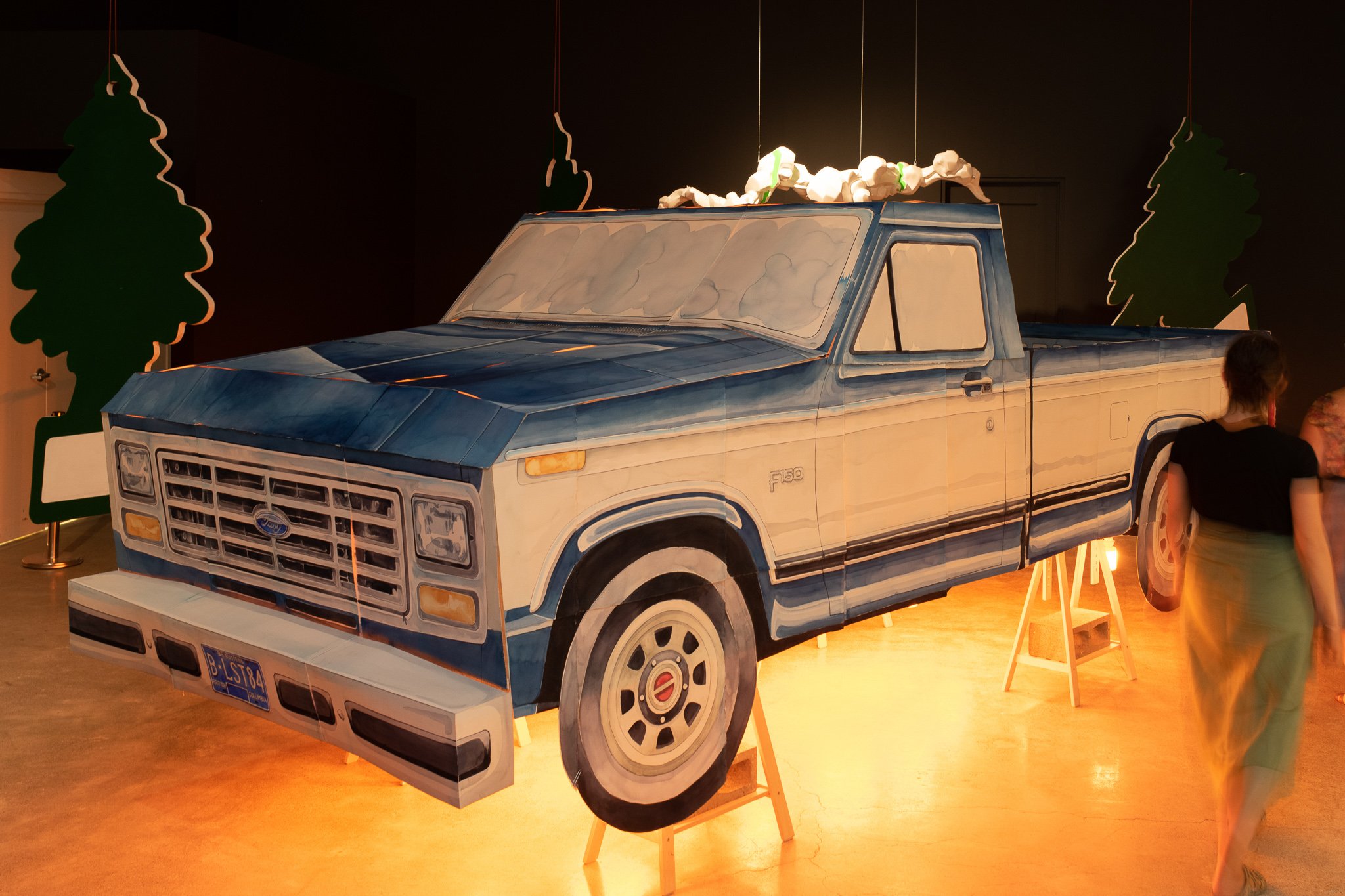
Hey. I’m a Ford F-150. Circa 1984.
That was the year a few things happened, among them the election of Ronald Reagan, the release of Purple Rain and the founding of Cirque du Soleil. It was a leap year. It’s also the year Brendan and his family moved to Nanaimo, from Dublin by way of Burlington, Ontario. I am imagining a younger Brendan playing Nintendo3 in the basement of a house pretty close to this gallery. Levelling up on Super Mario Bros, deftly navigating that little controller with the two red buttons on the right hand side. Played so much his thumbs hurt, but damn he could get all the way to level 8 without dying. Could fifind that ‘infinite lives’ hack in level 3 with his eyes closed. 1UP! Walking to the corner store, maybe small Brendan is passed by a Ford pickup truck. He can probably hear music coming out the window, and it’s easy to imagine the silhouette of the driver and whoever is riding shotgun. It’s the end of the work week and everyone wants to have fun. What’s the feeling you get hearing the rumbling of that truck—or the myriad others like it—rolling up behind you?
I’m an offering.
The ancestors need things in the afterlife: Chinese joss paper tradition invites the living to bestow gifts upon the deceased by iffier. Beginning with paper blessings to be burnt at temples, joss paper gets more elaborate from there. From simple comforts (food, drink), to symbols of wealth both basic (‘hell notes’ or replicas of dollar bills) and luxurious (Gucci bags and high end designer swag), paper replicas are created in often intricate detail as offerings from this life to the next. I personally have no connection to this practice, but you know, I really wish I did. I want to think of my blessings wafting into another realm, the satisfaction of knowing I am taking care of my ancestors, and they of me. Alas, from my vantage and theirs, it’s a hazy, broken relationally. A smoke-like diaspora.
I’m a very good copy.
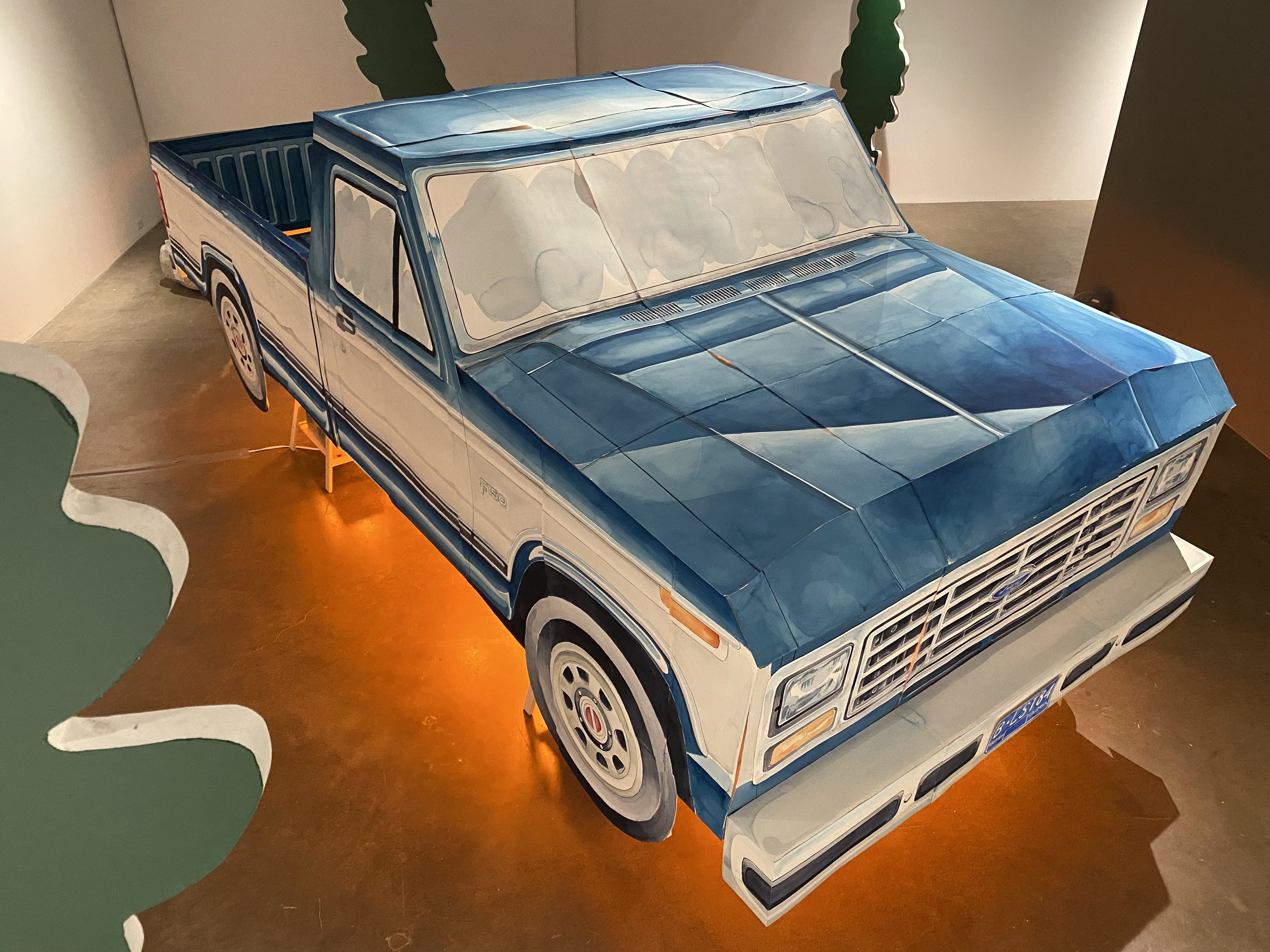
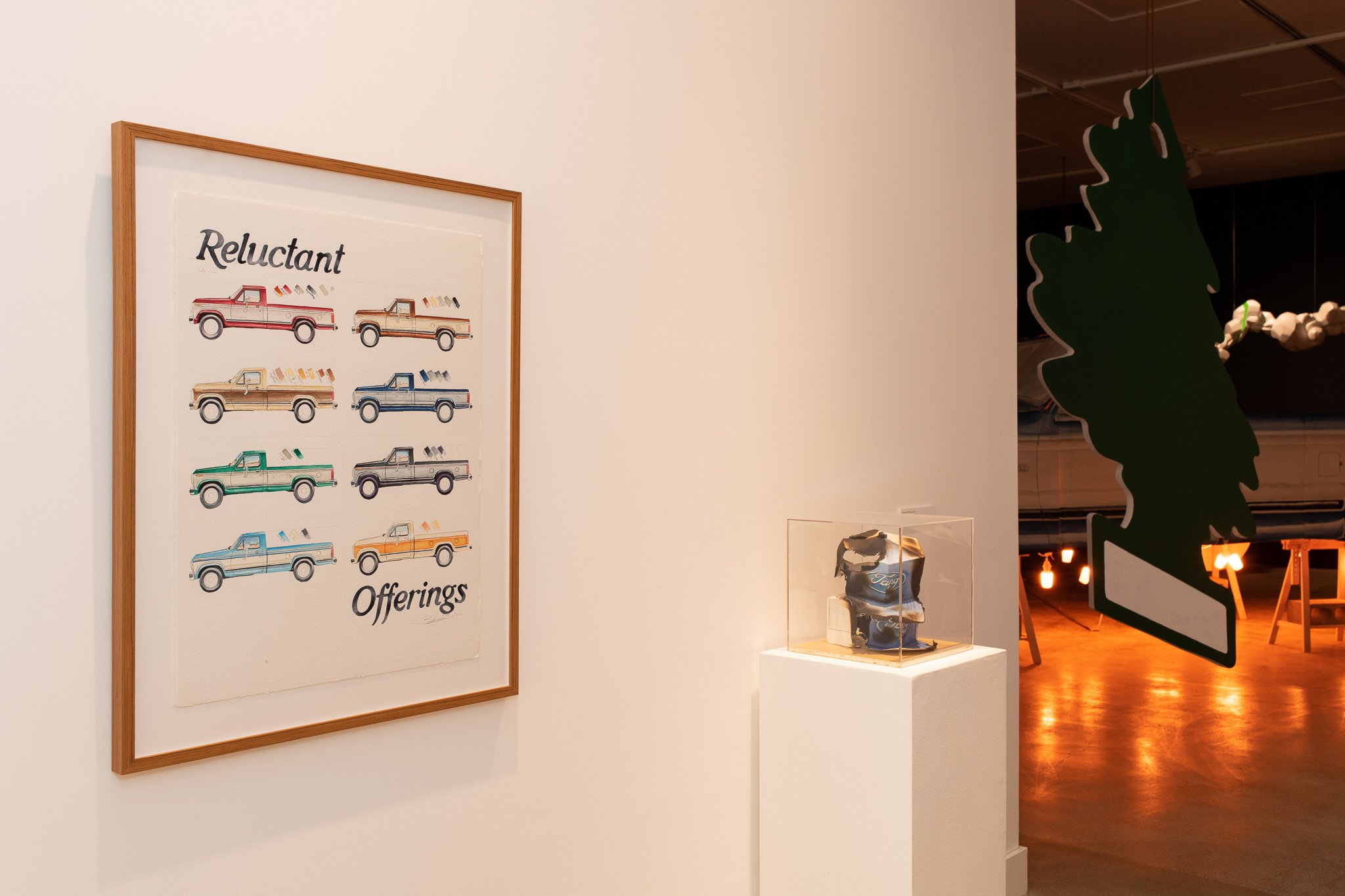
It’s watercolour and paper, attached to a made-to-measure wooden frame. You’ll want to look closely at the finer details, the texture of the paint on the toothy pulp, the cuts and folds that approximate the clean lines of an engineered auto-body. This work is executed with both precision and romance; I mean, like, it’s love and a very studious one at that. The time spent in the studio, the hours and hours of work and calculation, colour swatches and maquette and line work; the creation of A Reluctant Offering has required utter dedication, a meticulous molding of skill into form. And then, in its completion a surprising burst of feeling: the wash of dreamy sky-blue watercolour. It is unmistakably a beautiful copy, but unlike Tonka Trucks or model airplanes it’s not an homage in miniature, but a meditation in life-size. It’s a departure from the real thing, not only in material but in essence. It asks us to spend time and consideration (and a good dose of wonder), to get to know the origins of its creation, and to absorb the richness of its transformation. If indeed it’s meant for burning, then let it imaginatively dissolve—and what might we send into the afterlife with it, in both reverence and riddance?
I’m a joke.
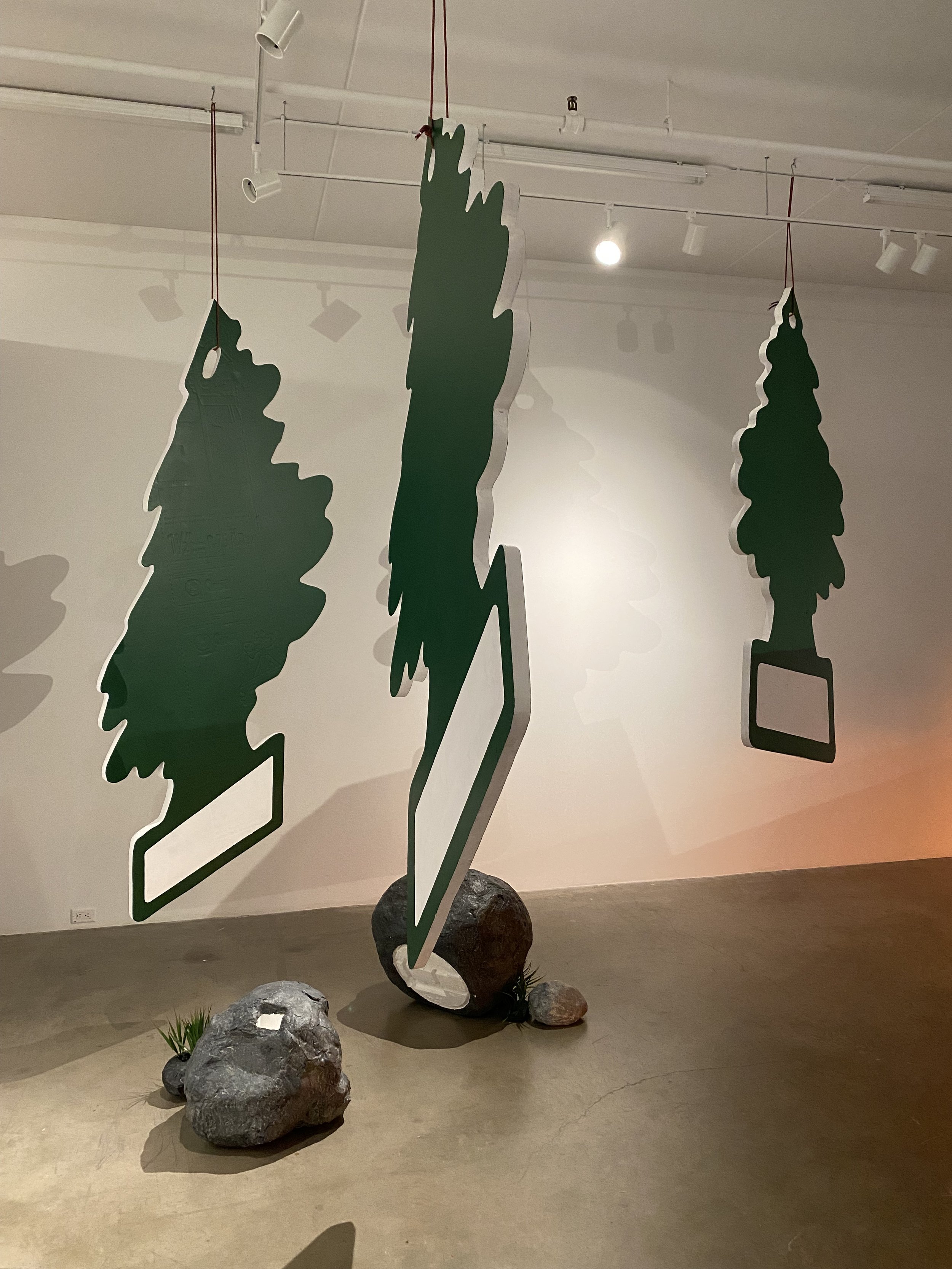
We’re surrounded by a forest of tree air fresheners that look like oversized cartoons and fake rocks. Which is to say nothing of the truck nuts. It’s ridiculous, and a bit stupid (I said this to Brendan’s face, and he’s ok with it). Importantly, it’s disarming. I want to think about the reasons why we develop this skill, why we build up the ability to make fun, to break tension with laughter. Making light of something heavy (those rocks are literally made of styrofoam) is a tactic, and the snicker-snort I experience in looking at those elements of this body of work also comes with an understanding that it doesn’t stem from benign origins, but rather a particular form of small(ish) town survival. (I grew up in St. John’s Newfoundland and I’m hilarious.)
I’m about to disappear.
If I imagine a core sample of meaning-making that goes all the way from the crust of popular media and good ol’ American advertising all the way through to the depths of working-class culture in Nanaimo in the 80s, it’s hard not to see the era’s Ford F-150 as a perfect vehicle for galvanizing a sense of both masculinity and identity. For some the memory of it is wildly nostalgic. And for others it’s exclusive, and painfully so.
There’s an emotion that is equal parts desire and fear. I’m not sure what to call it, but it’s an oft-overlooked way of relating to the culture all around us—some would call it a minor, but deeply felt, feeling4. It’s also something that many of us in hindsight can identify as a guiding experience of youth: to desire something so much, but to also come to understand that it’s not for you, and in fact that to embrace it is to invest in your own lesser status. How welcoming is that steel F-150 (and all the culture that might go along with it) to a nerdy, sensitive Asian immigrant kid? What does it take to fit into that hyper-masculine world of Labatt’s beer and trucker caps? What does it take to sidestep racism as it blossoms like an inevitable season all around us?
Humour, I suppose. Ingenuity. Tact. Slipperiness. Shame, absolutely. Vigilance, affability, diligence and self-restraint. Constant adaptation, mastery of materials.
An exploration of form, in all its complexity.
Notes
1. I’m not able to be there. It’s late Spring in 2021, and the pandemic has made it tough to get from where I am to the show. I talked to Brendan about the work, and I went to see it in the studio in Vancouver. I’ll miss that experience of being in the gallery space, taking some quiet time to address the work, fully installed. In the spirit of the last year of many missed and missing conversations, I’ll rely on an imagined exchange.
2. I’ll try to answer. Not as the object, but as an impersonation of the object, and sometimes as me, Vanessa. So you can think of it as some form of truth, but perhaps not yours, and probably not Brendan’s either.
3. For the record he was “more the comic collecting, super-hero drawing, desperately trying to breakdance version of nerd than the button mashing sort” (via email, April 29th, 2021). I was most definitely the button mashing sort, and played countless hours of Super Mario Bros with my friend Jenny in her living room in the 1980s.
4. See Minor Feelings: An Asian American Reckoning by Cathy Park Hong, or Ugly Feelings by Sianne Ngai, or Cruel Optimism by Lauren Berlant for more on the complications of cultural desire and it’s more murky affective counterparts.
Gallery Jones 2022
Nanaimo Art Gallery (image by: Sean Fenzl)
Nanaimo Art Gallery (image by: Sean Fenzl)
Nanaimo Art Gallery (image by: Sean Fenzl)
Gallery Jones 2022
Gallery Jones 2022
Gallery Jones 2022
Gallery Jones 2022
Gallery Jones 2022
Gallery Jones 2022
Nanaimo Art Gallery (image by: Sean Fenzl)
Nanaimo Art Gallery (image by: Sean Fenzl)
Nanaimo Art Gallery (image by: Sean Fenzl)
Nanaimo Art Gallery (image by: Sean Fenzl)
Nanaimo Art Gallery (image by: Sean Fenzl)
Nanaimo Art Gallery (image by: Sean Fenzl)
Public art project at Simon’s in Mississauga, ON.
Juggling futuristic and traditional ideas, Raincity Robot brings to light the tensions and contradictions that characterize contemporary culture. The Chinese vase recalls the four sister smokestacks of the old Mississauga Lakeview generating station, while robotic limbs inspired by barnacles make up the base, a nod to Mississauga’s high-tech industry and the city’s lakeside location.
The Swimmers:
The feeling of culture shock is familiar experience for many. The term “a fish out water” is an analogy often used to describe these mixed emotions. The Swimmers drawing series plays with the idea that we are the fish, are always finding our way through our greater culture.
For this collection of drawings, I have appropriated and altered various blue and white ceramic patterns so that they appear to be a watery, pool-like surface. My choosing of the blue and white pattern is two fold: firstly it is a pattern that I have been working with and developing in my own visual vocabulary, and secondly, it is a pattern that has appeared around the world. From the Ming Dynasty to Spode to Delft to Iznik, this ceramic meme has had a far reach, making it an excellent signifier for a culture and tradition.
In this rippling pattern I have also placed two wading figures that appear to be oblivious to the complexity around them. The reason for representing groups of figures, as opposed to a sole figure, is based in my feeling that we learn traditions and cultural practices from one another; these things are not hard wired. Furthering that notion, my groupings are usually parental figures with children or peers splashing about.
It is my hope that the work discusses the daily navigation of the cultures that surround us.
29.06cm x 17.78cm (11.44” x 7”) Inkjet Print (limited edition)
29.06cm x 17.78cm (11.44” x 7”), Inkjet Print (limited edition)
45.72cmx 30.89cm (18”x12.16”), Inkjet Print (limited edition)
17.78cm x 34.82cm (7”x 13.71”), Inkjet Print (limited edition)
37.25cm x 16.03cm(14.67”x 6.31”), Inkjet Print (limited edition)
44.33cmx 20.49cm(17.45”x8.07”), Inkjet Print (limited edition)
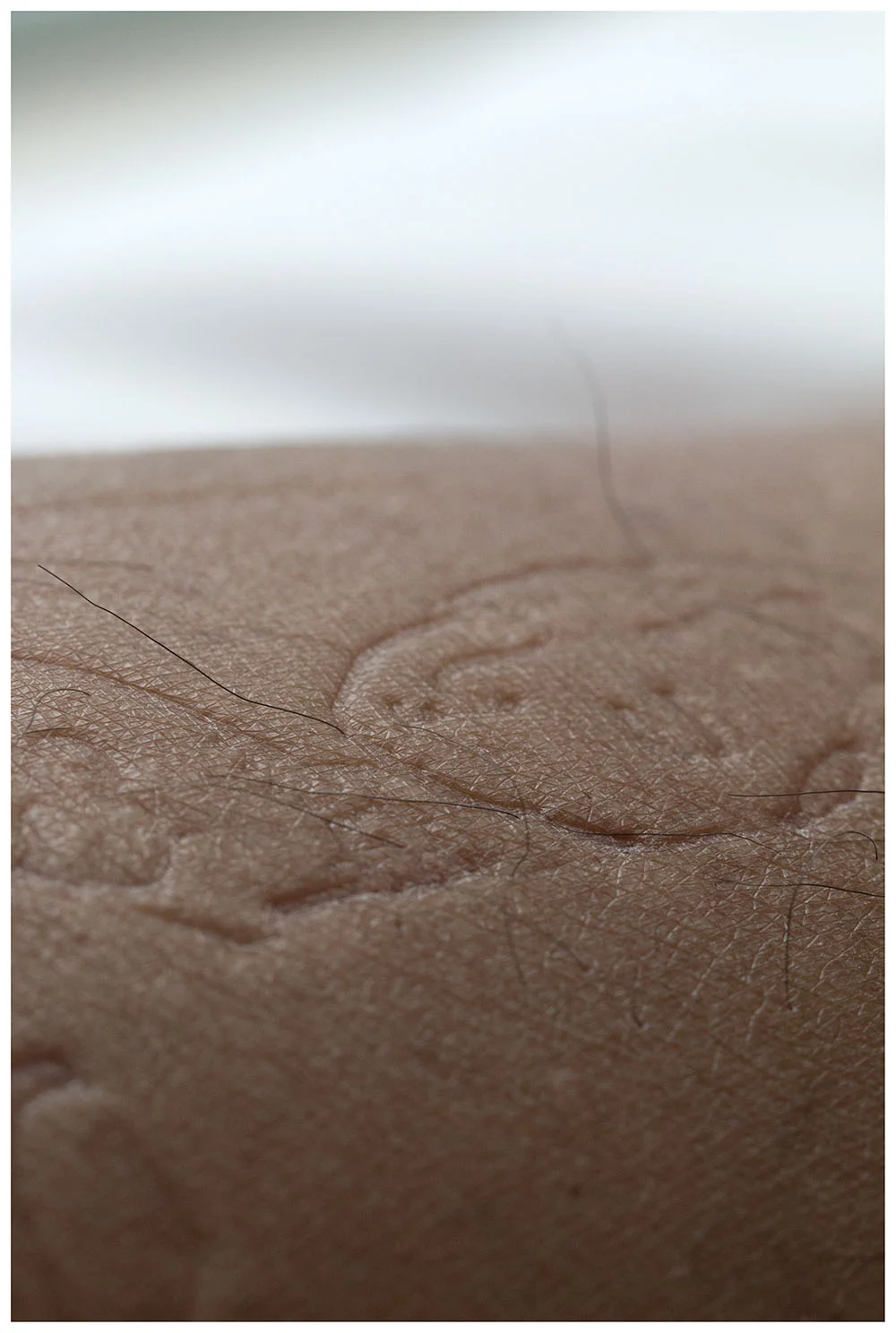
Residue: Tracing the Lore, a collaboration between Brendan Tang and Diyan Achjadi, explores the ways that ornamental motifs can reveal or reflect histories of migration. Through imprinting fragments of images onto their own skin as well as those of close relatives’, this project asks how familial lore and traditions are transmitted, and the residues that they leave upon us.
The process of the making the imprint is intimate and fleeting: a tile is chosen, then strapped on to the body. When the strap is loosened and the tile removed revealing the image, the body immediately readjusts and the skin begins to regain its original shape. The imprints are ephemeral and in flux, lasting mere minutes. They are documented before the pattern loses its crispness. The resulting photographs focus closely on the embossed skin and its imperfections: hair, pores and moles intermingling ornamental fragments.
The works in Residue reflect multiple transferences of imagery, from drawing to object to print to photograph. A series of relief tiles are translated from sketches into 3D-printed tiles that are then blind-embossed into skin. The resulting impression is documented through photography, and digitally-printed onto paper. Through exploration of these processes, Residue: Tracing The Lore is an investigation into the language of printmaking's material possibilities, as well as its function as a means for the transference of ideas and images.
Pigment print on Ilford Smooth Gloss, 2015 (collaboration with Diyan Achjadi) 30" x 20"
Pigment print on Ilford Smooth Gloss, 2015 (collaboration with Diyan Achjadi) 20” x 30”
Pigment print on Ilford Smooth Gloss, 2015 (collaboration with Diyan Achjadi)
Pigment print on Ilford Smooth Gloss, 2015 (collaboration with Diyan Achjadi) 30" x 20"
Arm with printing device.
Pigment print on Ilford Smooth Gloss, 2015 (collaboration with Diyan Achjadi) 30" x 20"
Pigment print on Ilford Smooth Gloss, 2015 (collaboration with Diyan Achjadi) 30" x 20"
3d printed Kawung tile
Pigment print on Ilford Smooth Gloss, 2015 (collaboration with Diyan Achjadi) 30" x 20"
Pigment print on Ilford Smooth Gloss, 2015 (collaboration with Diyan Achjadi) 30" x 20"
Pigment print on Ilford Smooth Gloss, 2015 (collaboration with Diyan Achjadi) 30" x 20"
Pigment print on Ilford Smooth Gloss, 2015 (collaboration with Diyan Achjadi) 30" x 20"
Pigment print on Ilford Smooth Gloss, 2015 (collaboration with Diyan Achjadi) 30" x 20"
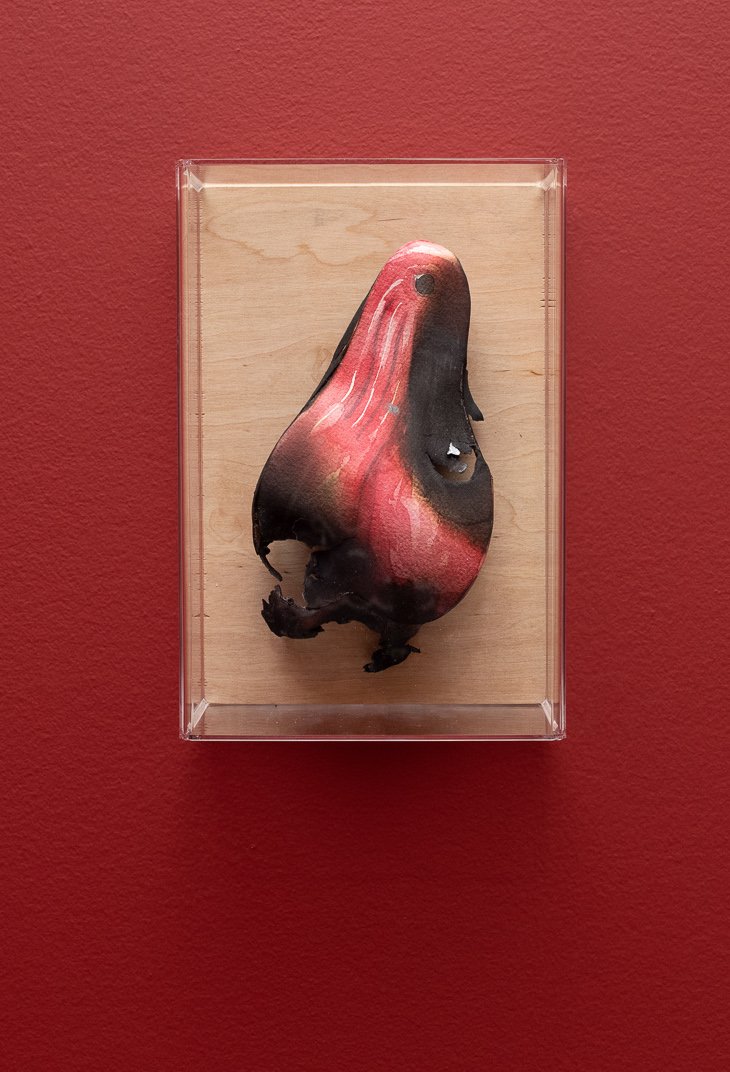
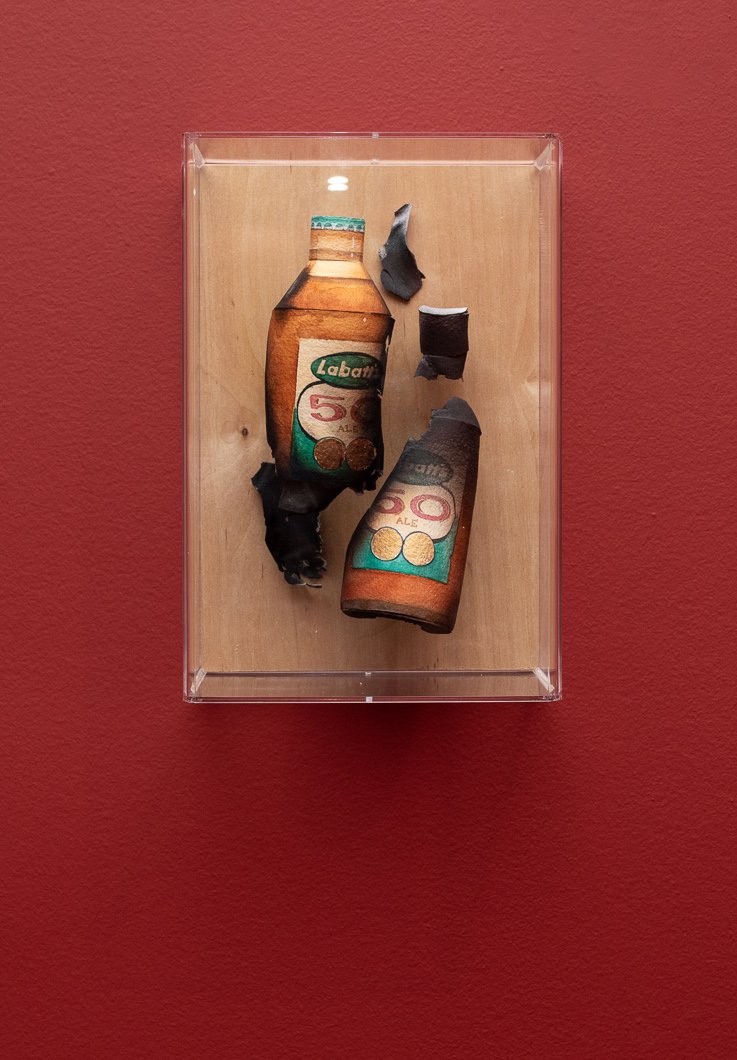
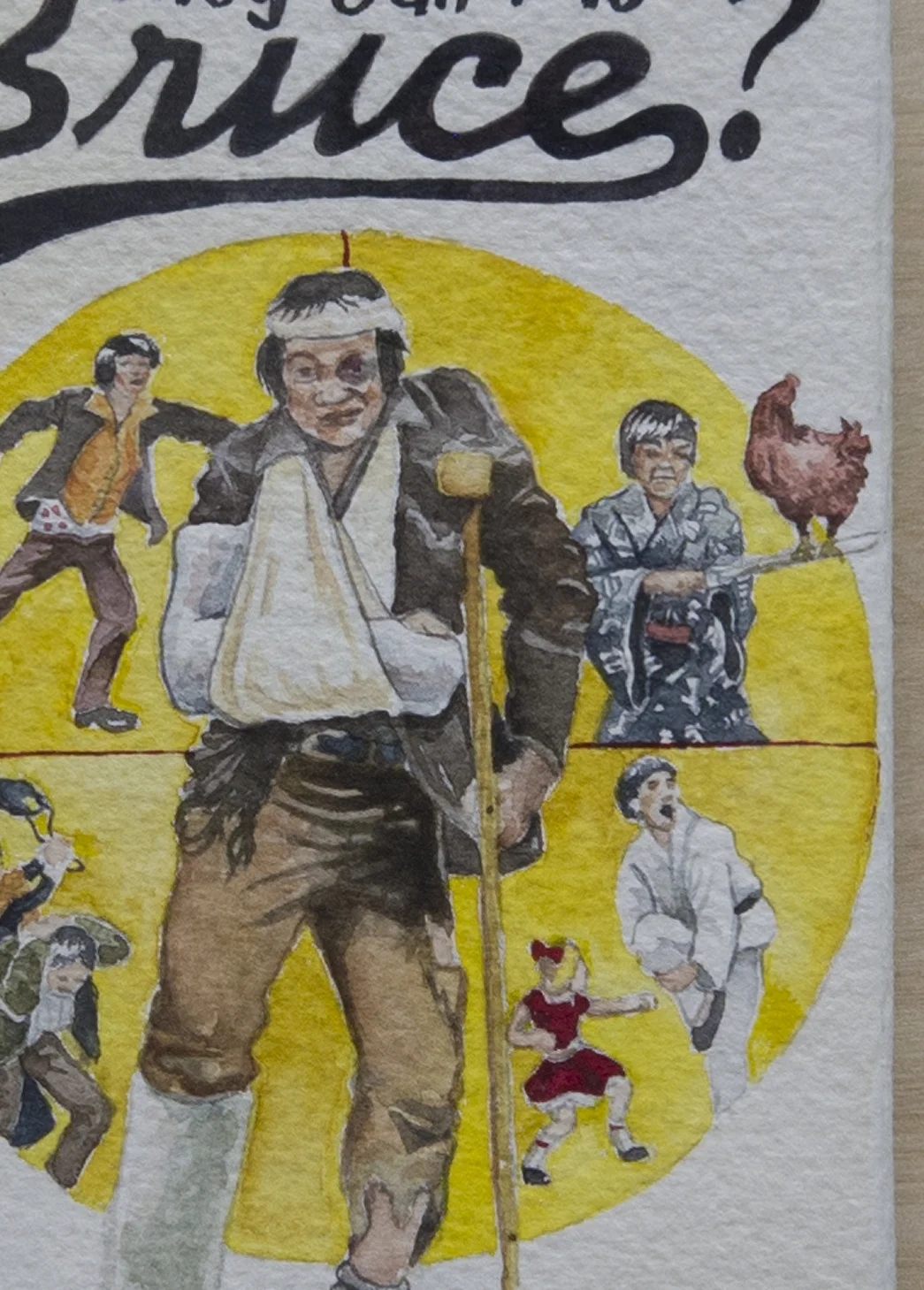
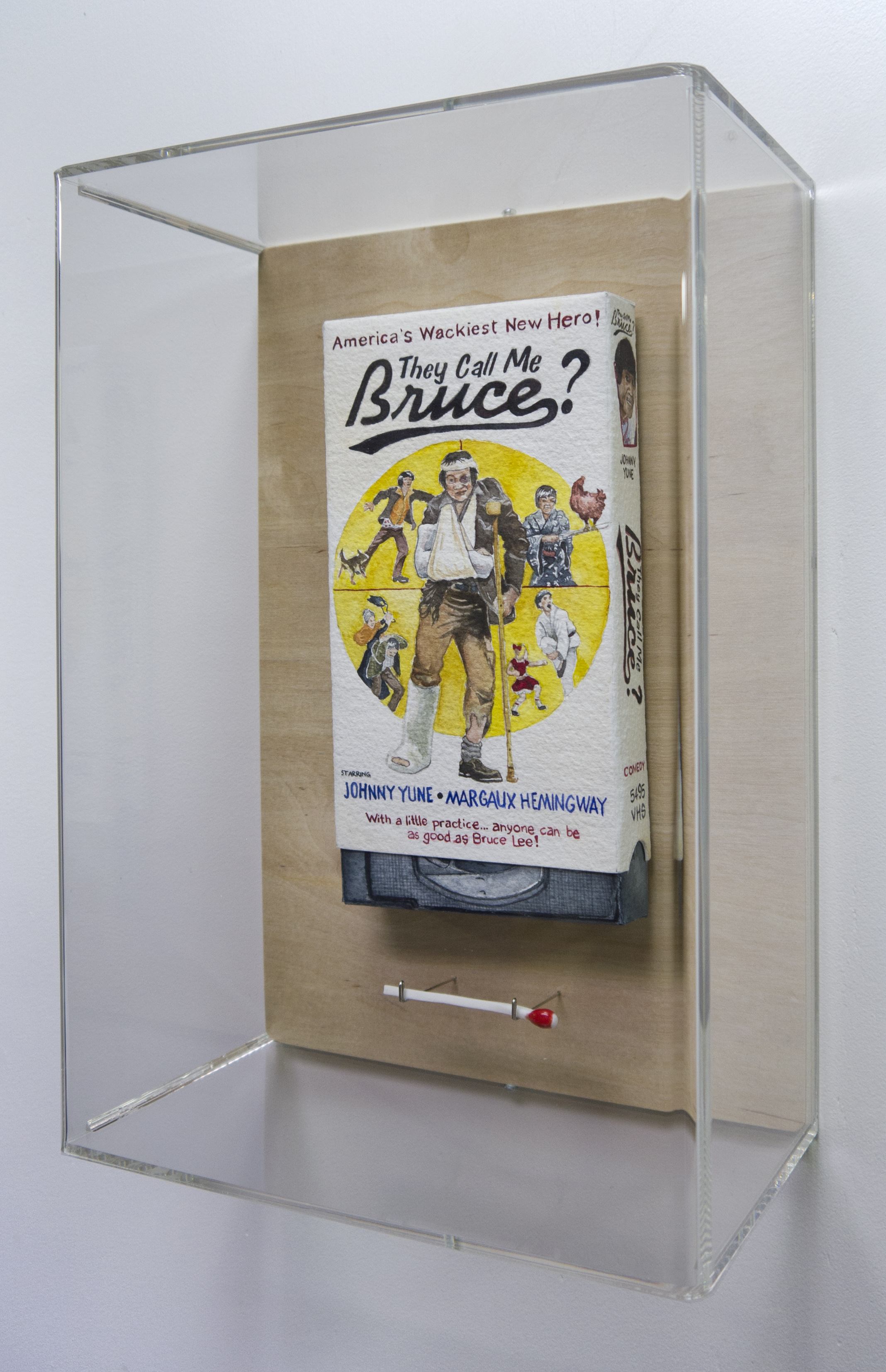
The Joss Paper series is a collection of watercolour painted replicas of objects and ephemera that held significant places in my heart as a child and adolescent. Once meticulously rendered, the painted objects are folded to re-create the original shape and size of the items, and are then mounted, accompanied by a porcelain match, within a plexi-glass display case reminiscent of a museum display.
The term Joss Paper references a Chinese cultural tradition wherein a paper replica of an object is burnt as an act of sending gifts to relatives and loved ones in the spirit world. By far, the most common item depicted is bank notes, but other valuables such as jewelry, electronics, or even cigarettes are burnt in effigy to send on to the ancestors.
This body of work originated during the process of creating work for the Ready Player Two show I did in conjunction with Sonny Assu in 2017. In that show, Sonny and I did a deep dive into our shared experiences with comics and video games, and how nerd culture helped us navigate early issues of identity. In that show, I re-created a Nintendo, a Game-Boy and a classic VCR in watercolour and assembled them at a scale of 1:1 for use as elements of a basement vignette. In making those initial pieces, I discovered that, in fact, what I was doing became not only an exercise in remembering, but in doing so, fetishizing and thus, honoring these talismans of my youth.
Intrigued, I continued to explore this series. The use of fire to communicate with the deceased runs parallel to contemporary practices of burning written memories as a means of expunging one’s past; this dualism of meaning in contemporary culture has been a consistent theme in my work, a hybrid of the old and the new. In the Joss Paper series, the paper objects are shown beside a porcelain match, at once inviting the viewer to set fire to the piece and simultaneously denying access to the act. In transforming an object from my youth into an effigy to be burnt, I attempting to both release it from my memory while at the same time communicating with past selves. However, the inclusion of a bogus match makes the letting go hard to do, which it is.
In fetishizing objects from my childhood, I am inevitably exploring notions of nostalgia and the dangers inherent in nostalgia. This series is presented in a fashion that not only recalls classical museum displays, but is also a nod to public fire-hose boxes with the inscription, “In Case of Emergency Break Glass”. Both of these references create an anthropological narrative that heightens the experience of viewing, elevating objects and imbuing them with meaning and urgency. At what point does the need to release past trauma become so urgent that we need to burn it all to the ground? What is the value of a memory and does it weigh us down or set us free?
Watercolour on Paper, Porcelain, Wood, Acrylic, 2019. 8” x 12” x 4.5”
Private Collection
Watercolour on Paper, Porcelain, Wood, Acrylic, 2019. 8” x 12” x 4.5”
Private Collection
Watercolour on Paper, Porcelain, Wood, Acrylic, 2019. 8” x 12” x 4.5”
Private Collection
Watercolour on Paper, Porcelain, Wood, Acrylic, 2019. 8” x 12” x 4.5”
Private Collection
Watercolour on Paper, Porcelain, Wood, Acrylic, 2019. 8” x 12” x 4.5”
Watercolour on Paper, Porcelain, Wood, Acrylic, 2019. 8” x 12” x 4.5”
Watercolour on Paper, Porcelain, Wood, Acrylic, 2019. 12” x 8” x 4.5”
Watercolour on Paper, Porcelain, Wood, Acrylic, 2019. 12” x 8” x 4.5”
Watercolour on Paper, Porcelain, Wood, Acrylic, 2019. 8” x 12” x 4.5”
Private Collection
Watercolour on Paper, Porcelain, Wood, Acrylic, 2019. 8” x 12” x 4.5”
Private Collection
Watercolour on Paper, Porcelain, Wood, Acrylic, 2019. 20” x 17.75” x 4”
Watercolour on Paper, Porcelain, Wood, Acrylic, 2019. 20” x 17.75” x 4”
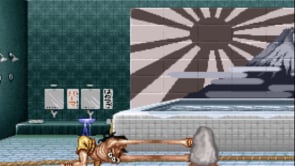
Clay Fighter is based on my lifelong love of video games, and references Street Fighter which was a childhood favourite. One of the reasons that this particular game resonated with me is that it was the first time I saw a South Asian character represented in a video game. While there are some absolutely problematic elements to the character Dhalsim (the implication of shamanism at best or cannibalism at worst based on his skull necklace), this was the first time I saw a South Asian male portrayed as a person of power in popular culture. Much more commonly South Asian males are portrayed in a different caricature - the convenience store owner or taxi driver, who are portrayed as less powerful than the people around them. I never forgot what it felt like to see Dhalsim for the first time. When I began working with Sonny Assu on our exhibition Ready Player 2, I took the opportunity to create an homage to Street Fighter, wherein Dhalsim is a ceramic artist like myself. The Clay Fighter project is within the cannon of self portraiture, especially the idea that what you do is who you are. I have been working with clay and within the ceramic community for so long that sometimes I feel as though what I do supersedes who I am - much in the same way that how I look can supersede who I am. Clay Fighter is a part of the Ready Player 2 exhibition, continuing to tour across Canada in 2018.
Credits: Dhalsim sprite sheet - Lord Zymeth, 8 Bit Unchained Melody - Familclone Games
Known for his striking ceramic work, Vancouver-based artist Brendan Lee Satish Tang ventures into unfamiliar territory with his new installation-based exhibition meatspace. The result of Tang’s three-month residency at BAF, meatspace revolves around a series of sculptures rendered in seemingly random configurations of geometric pieces of black foam core and strips of wood. These asymmetrical, abstract sculptures formally evoke everything from architectural scaffolding, metro maps, and cell networks to rhizomes, skeletal systems, and structural formulae for complex molecules.
Tang first garnered attention for his (still ongoing) Manga Ormolu series which features bold trompe-l’oeil mashups of blue-and-white porcelain vases with toys, robots, electric wires and plugs. Critics and curators have theorized these playfully anthropomorphic ceramic sculptures with their unexpected juxtapositions of high art and pop culture, craft and commodity, the historical and the high-tech, as references to Tang’s own diasporic identity as well as to multifarious global histories of empire, cultural exchange, and commercial exploitation.
Writing on Tang’s ceramic-focused practice in 2009, curator Kristen Lambertson observed, “Tang’s work explores technology’s potential to be not only disruptive and violent but also a benevolent force of transformation.” This ambivalent fascination with the high tech and its impact on humans continues to percolate in Tang’s new sculptures at BAF; the exhibition’s title “meatspace” comes from a term coined by web guru John Perry Barlow to differentiate the physical world from the virtual world of “cyberspace.” Tang describes the sculptures as cloud formations: recalling the angular “low polygon” shapes of early 3D computer graphics, these delicate structures poised in BAF’s white cube space suggest not only the clouds above us, but also The Cloud, that nebulous digital domain to which we back up our computers and smart phones, uploading all the many documents, images, and files that undergird our lives today. Tang compares the sculptures—with their black geodesic outgrowths extending from the jointed wooden frameworks—to “cave drawings” that track our often ambiguous yet profoundly symbiotic relationship to cyberspace.
Bridging the digital and the analogue, the virtual and the real, meatspace makes manifest the invisible yet colossal digital platforms that intersect with our lives, and upon which we now fundamentally depend. However, his interest in exploring our dependence on cloud computing and other digital platforms does not pre-empt his commitment to the artworks’ materiality and his employment of a hands-on, labour-intensive process. Each piece is constructed of hand-sawn pieces of wood and carefully cut-out pieces of foam core of numerous dimensions, and Tang maintains a DIY, minimalist aesthetic by leaving the wood unvarnished and the residue of glue holding the pieces together unconcealed.
Unlike his ceramic sculptures with their glossy veneer and aura of precious permanence, these works have the air of a project in flux—each piece could be easily taken apart, tinkered with, and re-configured, like a puzzle or maquette. Indeed, Tang characterizes his experience of building these sculptures as highly intuitive, where he discovers in real time—through the concrete, sometimes clunky process of trial and error—the unexpected paths and patterns that guide their creation. In this way, these works function both as traces of and prototypes for the restless creative process itself.
(Text Provided by the Burrard Art Foundation and written by Zoe Chan, photographs by Dennis Ha)
A collaboration between Alex McLeod and Brendan Tang , #Lovechild is an exploration of the narrative possibilities of a real world object enhanced via digital augmentation.
The installation consists of several components. A ceramic vessel by Tang is displayed on a pedestal in the TechLab. A live shot of the vessel (and also the image of a person in the Gallery) feeds into a computer that overlays it with Alex McLeod’s computer-generated animation and then projects the combined images on the Gallery wall. This melding of the real and the virtual offers a new way for viewers to interface with an object in a gallery setting, without the need for a smartphone or other device.
To further expand this meditation on material culture, Tang deliberately mimics museum displays of broken pottery fragments by making his Lovechild vessel an incomplete object. Yet instead of “completing” the vessel with a didactic augmentation, McLeod’s imaginative overlay offers a new narrative that transforms the static object into a living, breathing organism.
Presented as part of the exhibition The Future is Already Here, curated by Rachel Rosenfield Lafo.
Read the exhibition brochure
Installed at Gallery Jones, Vancouver BC
Collaborative and independent works by Brendan Tang and Sonny Assu combine elements from science fiction, comic book, and gaming cultures to consider how these forms alternately reinforce and transcend racial boundaries in youth culture.
In their individual practices, Tang and Assu frequently negotiate the material and conceptual dynamics of culture and ethnicity. Informed by their mixed-race backgrounds and experiences of Canadian life in the 1980s and 1990s, for this exhibition the artists bring together found objects, selections from previous bodies of work, and new collaborative pieces to create immersive spaces that evoke the adolescent sanctuaries of their time: the basement, the arcade, and the comic book store.
-Laura Schneider, Reach Gallery (Abbotsford, BC, Canada)
This is a collection of works that infiltrate and exploit beauty – a notion intimately connected to the decorative arts. The works are indeed beautiful; inspired by 18th century French porcelains (Sevres and Meissen) and ceramic ormolu, these meticulously crafted, richly ornamented vessels lure and please the viewer. The grandiosity of the excessive ornamentation – including gilded leaf, scrafito, painting and decal ornament – is amplified by wall decoration and dramatic lighting. If it is possible to be too rich, perhaps these vessels are.
But with further examination, the distanced elitism suggested by this ornate display is undermined. The showcase of bombastic ornament offers a means to critique formalism, utopianism and social detachment. Adding to the historic forms and decoration, I have incorporated personal images, elements of technology (including sound and video), and a variety of non-traditional materials. This interplay relates the work to the contemporary social context, while drawing on archetypes of wealth, opulence and fabricated beauty to inform the overall narrative. The resultant tension between the decorative arts and nontraditional elements invokes layered reactions from the viewer: attraction, surprise, confusion, and reflection.
Humour is also central to the works in Through the Gilded Looking Glass. Humour is apparent in the titling of the works (e.g., Just What is it that Makes Asian Men so Appealing?), self-deprecating humour (e.g., Royal with Cheese) and ridiculous ornamental elements (e.g., swaying plastic flowers in Passenger’s Paradise). By employing satire, I create a point of access. As in the statement, “many a truth was said in jest,” humour offers the viewer is a portal to a further reading of the works.
The subject matter for Through the Gilded Looking Glass spans self-identity, power relationships, citizen apathy and engagement, and consumerism. While seemingly diverse, these works are thematically unified. Visually, the exorbitant decoration is common to the series. Conceptually, the works demonstrate tension between beauty, and its close proximity to the ‘Other’ – the un-beautiful. The vessels, then, mirror our everyday lives, and our inability to shut out the uncomfortable and tragic elements of life – no amount of decoration can mask this. Through the Gilded Looking Glass is an ornamented reflection of human existence.
Sold, Private Collection
Sold, Private Collection
Sold, Private Collectio